
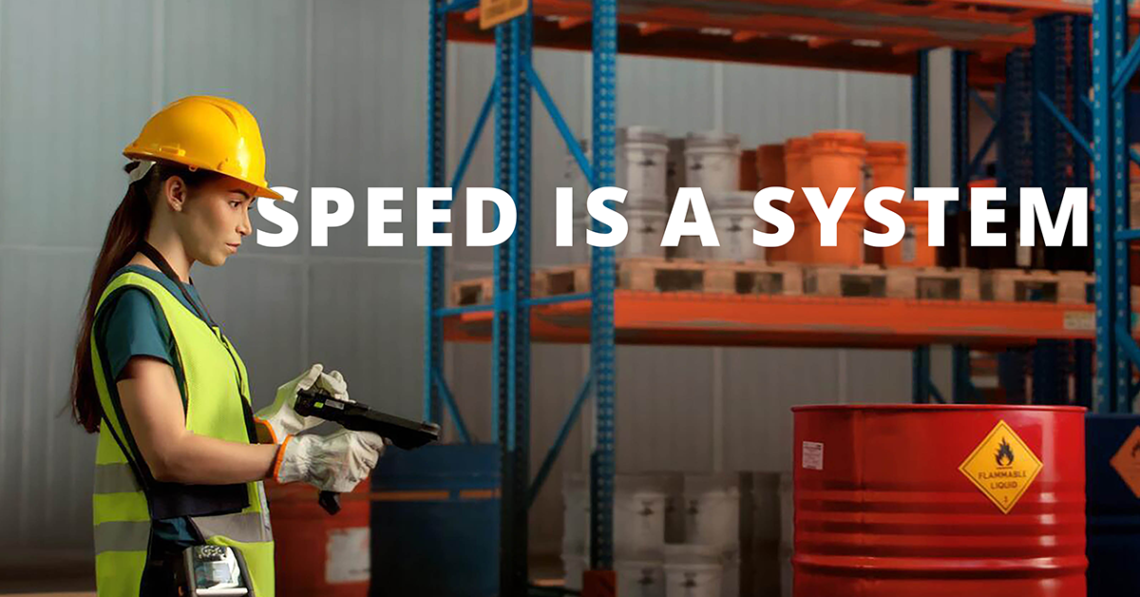
What does a mobility ecosystem really look like, and what happens when it actually works?
It starts with a simple concept that we call “speed is a system.”
Let’s take a quick look at an example.
One of our large warehouse customers was struggling with legacy mobile devices that were slowing down inventory management and fulfillment processes. So, the first order of business was to address the issue with the mobile hardware associates were using on the job. Devices were outdated and lacked the computing power, memory, and faster connectivity needed to complete tasks faster.
By simply replacing those devices with new, modern hardware featuring touchscreen efficiency, the company saw a 4% productivity improvement in just three weeks, and that was without any additional software, wireless networking, or other improvements that could have further boosted frontline speed and efficiency.
This already put the company on track to get a full return on its investment in new mobile devices within nine months. But it was saving 4% on its labor costs in the process. When you’re picking hundreds of orders and managing thousands of inventory SKUs, that adds up to a big difference in the company’s bottom line and overall performance.
But this is only the beginning for most customers like this. When you combine upgraded mobile devices with a wireless network configuration that enables them to connect and transmit data at peak speeds, you can get even more speed and performance from your devices.
Also, it’s possible to achieve even greater speed and efficiency by implementing more flexible, purpose-driven hardware for specific tasks and workflows. Let’s take a look at those opportunities next.
Unlocking More Speed with Flexible and Task-Specific Mobility
In helping another customer maximize speed and mobile performance, we replaced vehicle-mounted forklift computers with a more compact, multi-purpose, grab-and-go enterprise-grade Zebra ET50 tablet. This tablet was mounted in each forklift but could be quickly unmounted and taken on the go. So, it was usable as both a vehicle-mounted mobile computer and a handheld device.
We partnered with ProClip, a mounting solutions provider, to deploy the right grab-and-go mounting system, making this possible. The Zebra ET50 was set up to run business apps and help operators manage work and inventory, and to scan pallet barcodes with an ultra-rugged Zebra DS3678 barcode scanner—without the operator needing to leave the cab.
This saves seconds or minutes on every forklift-based inventory and movement task. But when the operator needs to get out of the cab or perform other tasks in warehouse aisles or in an office, the tablet can be quickly released and used as a mobile device, including built-in scanning capabilities.
We’ve helped companies achieve similar optimization with wearable mobile technologies, such as equipping warehouse pickers with Zebra hands-free wrist-worn mobile computers and wireless ring-style barcode scanners worn on their fingers. The mobile computer provides quick, easy access to orders and pick lists, and the scanner allows correct picks to be scanned and verified while keeping the picker’s hands free to handle and move inventory.
With a wireless headset and solutions such as voice-directed picking, pickers can also interact with warehouse mobile apps and even receive pick instructions, warehouse locations, and guidance along the most efficient routes—all without even needing to touch a mobile computer screen. It happens with simple voice commands and audio.
In real-world rollouts, we’ve seen companies achieve efficiency and productivity gains of 30% or more by using this kind of task-focused workflow improvement strategy.
This is another way to take mobile device upgrades even further and to start deploying the fastest, most optimized solutions for each task and workflow. This way, you can compound your overall gains in speed and efficiency and do more than just upgrade to faster, more modern hardware.
It’s all part of an overall “speed as a system approach,” where each localized solution for each task or workflow is part of an overall mobility ecosystem that multiplies your speed improvements.
So, if you’re wondering what happens when mobility actually works, and you want to envision what “speed as a system” can really mean for your operations, just think about these examples and the many possibilities available to you.
Get More Insights and a Full Assessment of Your Speed and Efficiency Potential
To learn more, connect with our mobility experts at IntegraServ for more insights, case studies, and recommendations. We’ll be glad to learn more about your operations, your current mobility ecosystem and needs, and provide a full assessment of your best opportunities to boost speed and performance in what you do.
You must be logged in to post a comment.